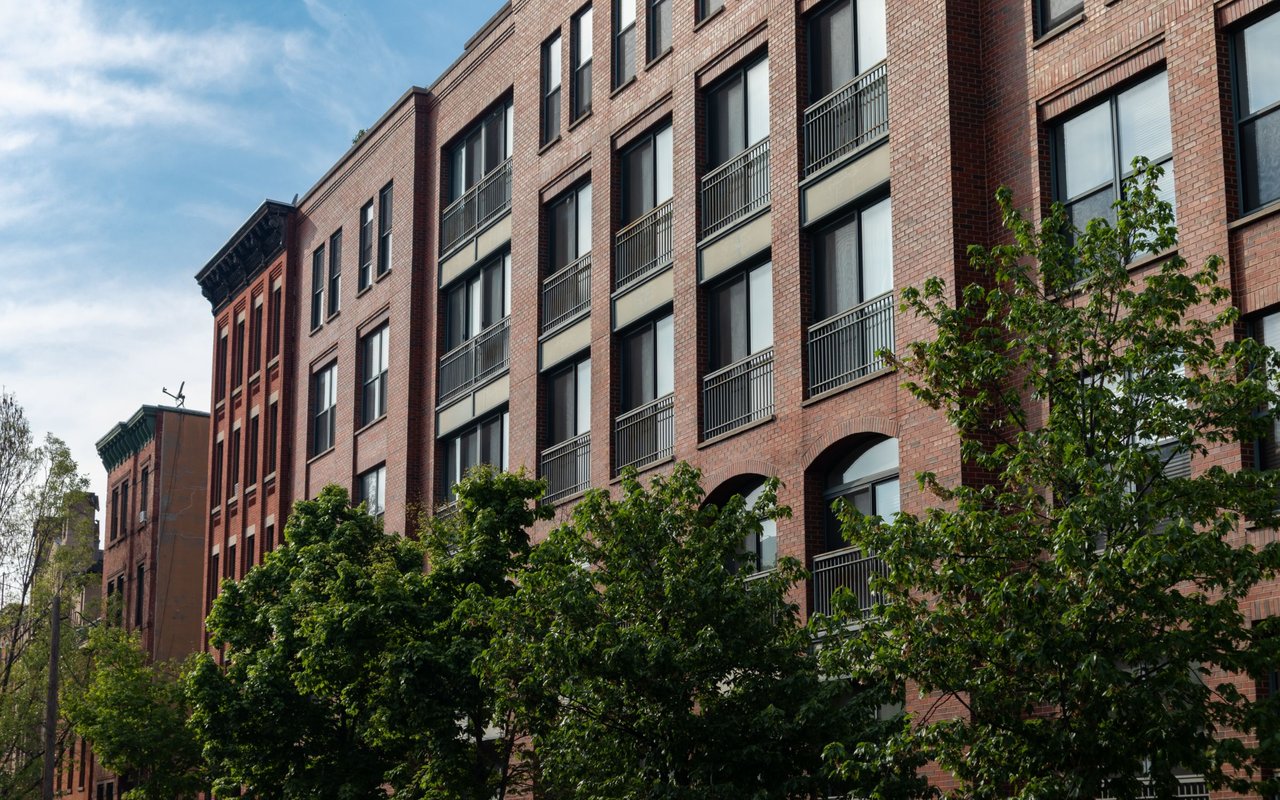
Scroll through active Edgewater listings this summer and you will find a phrase that never appears on the portals' summary pages: Seller is offering a Special Assessment Buyer Credit. It shows up in units at The Promenade. It shows up at 101 State Route 5, where the seller has agreed to pay off the assessment at closing. Once you know to look for it, the pattern is impossible to unsee, and it changes how you should read every price tag on River Road.
The headline number in this market is doing very little work. A buyer who compares Edgewater on median price alone is comparing the wrong thing.
The Median Is Louder Than the Signal
Pull the same neighborhood from four data providers and you get four different Edgewaters for 2026. Movoto reports a median sale price of $721,500 in April 2026, with 105 homes sold and 45 days on market. By June 2026 Movoto's list-side median had drifted to $679K, an eight percent decrease year over year. Redfin's data put the median sale around $710,000 in March 2026, up sharply from the prior year. Zillow's home value index sits at $632,011, up 0.8 percent. Homes.com puts the trailing twelve-month median sale at $626,500, down four percent.
The spread is not a data problem. It is the market telling you something. Edgewater's sales mix is dominated by condos, so a few months of higher-end waterfront closings can swing the median dramatically, and a big year-over-year jump often says more about which units sold than about your unit's value. Roughly 68.85 percent of Edgewater's housing sits in buildings with twenty or more units, and 44.89 percent of the stock was built since 2000. That is a market where price is set inside individual buildings, not across zip codes.
The Three Numbers That Actually Price a Unit
Once you set the median aside, the real pricing conversation reduces to three variables that a listing rarely surfaces on its own.
View line. Two units with identical floor plans in the same building can trade at very different prices depending on where their windows face. Direct Manhattan skyline units tend to command roughly 30 to 35 percent more than comparable non-view units in the same building, partial skyline views add 15 to 25 percent, and river views without the skyline add 10 to 15 percent, with interior and courtyard units serving as the pricing baseline. Automated valuation tools struggle with this because a fourth-floor unit facing a parking deck and a fourteenth-floor unit facing the George Washington Bridge share the same square footage but not the same value.
HOA fee per square foot. The absolute monthly fee is the wrong denominator. A representative City Place two-bedroom listed in spring 2026 carries a $971 monthly HOA on 1,325 square feet, roughly $0.73 per square foot per month, plus about $8,962 in annual taxes. That is the number to compare across buildings. HOA fees in urban New Jersey communities regularly land in the $400 to $700 range and run higher where property values, labor costs, and amenity packages are richer. High-rise buildings in sought-after areas may exceed $1,000 per month. In Edgewater, waterfront exposure adds a cost the fee summary rarely explains: the riverfront setting brings sea-air corrosion and more frequent façade and metalwork maintenance.
The pending assessment. This is the number that reprices whole buildings quietly. A pending assessment can quietly reprice an entire building, and buyers' attorneys will find it during due diligence, so the price should account for it on day one. Assessments over $5,000 per unit are commonly cited as a threshold that motivates sellers to move before their neighbors do. Older buildings hitting the 20 to 25 year mark tend to face concentrated capital cycles for roofs, elevators, façades, and mechanicals. That timing matters more than any single monthly fee.
What This Looks Like Across the Building Stock
Edgewater is not one market. It is roughly a dozen, each with a different price mechanism.
- Waterside Condominiums at 1111 River Road, a 205-unit community completed in 1987, offers studios ranging from 428 to 678 square feet priced between $272,292.50 and $286,312.50 and one-bedroom units from 557 to 1,175 square feet, priced $300,000 to $380,000. The age is the story. A building this size approaching its fourth decade is deep into capital-cycle territory.
- The Promenade, a gated pier community, has been the most visible source of assessment-credit language in 2026 listings.
- Hudson Harbour at 1203 River Road offers gated hi-rise inventory with recently renovated 650-square-foot units on the market this spring.
- The Glass House at 3 Somerset Lane is the newest tier. Completed in 2018, it includes 92 luxury condominiums and 15 riverfront townhomes, with an outdoor pool, fitness center, media and lounge rooms, concierge and doorman service, and garage parking. That amenity load flows into the fee.
- Hudson Cove is a different animal entirely, a gated cluster of 36 townhomes of roughly 3,000 to 3,750 square feet across three stories with two-car attached garages, most completed around 2001 to 2002.
- City Place, Independence Harbor, Admiral's Walk, One Hudson Park, and Grand Cove round out the mid-market, each with a different fee structure, reserve position, and view mix.
The point is not that any one of these is a better buy. The point is that a $700,000 asking price behaves very differently at a 1987 mid-rise than it does at a 2018 tower, and the difference sits almost entirely in the HOA line and the reserve study.
The Closing-Day Detail That Trips Up Out-of-Town Buyers
Edgewater applies a friction point at the closing table that buyers moving from Manhattan or the suburbs rarely see coming. The Edgewater Building Department issues certificates of continued occupancy on the resale of buildings, condos, and co-op units and on rental of condo and co-ops. That means a resale is contingent on a municipal inspection with its own scheduling window. Fire inspections happen Monday, Wednesday, and Friday from 4 to 7 p.m., electrical on Monday and Wednesday evenings, and plumbing on Tuesday, Thursday, and Friday mornings. A tight closing calendar that assumed a state-standard flow can lose a week here if the inspection is not booked early.
How to Read a Building Before You Read the Listing
The listing tells you almost nothing that determines whether a unit is priced correctly. The building tells you almost everything. Before making an offer, ask for the following.
- The last twelve months of closed sales inside the building, separated by view line.
- The current operating budget and the most recent reserve study.
- Any assessment approved in the last 24 months and any assessment under discussion by the board.
- The master insurance policy, its deductible, and, critically, whether flood is included. Many buildings do not include flood coverage in the master policy, which pushes the cost onto the unit owner's own policy.
- A summary of what the monthly fee actually pays for. Most Edgewater associations cover management, on-site staff, common-area utilities, janitorial, landscaping, snow removal, and trash, and the delta between buildings is usually amenity load and reserve contribution.
Two units with the same list price and the same square footage can produce a five-figure gap in first-year cost once you carry HOA, taxes, insurance, and a share of any pending assessment through the math. That is the number worth comparing.
A Short FAQ
Does a higher HOA mean a worse deal? Not necessarily. A well-funded reserve reduces the odds of a surprise assessment later. Reserves matter, and a well-funded reserve reduces the risk of special assessments for future repairs. A low fee in an aging building with thin reserves is often the more expensive proposition over a five-year hold.
Why do lenders care about the building's finances? Lenders review condo project finances during loan approval, and weak reserves, high delinquency, or pending litigation can limit financing options. A building that has been quietly deferring maintenance can complicate a buyer's mortgage even when the unit itself is pristine.
Does the mortgage rate environment move Edgewater faster than other markets? It tends to. The buyer pool leans heavily on Manhattan-adjacent professionals who watch rates carefully, and Freddie Mac publishes the cleanest weekly read on where financing costs stand at freddiemac.com/pmms. When rates ease, waterfront condo demand responds quickly.
Is a view premium recoverable at resale? Historically yes, because the view is the one feature nobody can renovate into a unit later. Skyline lines behave more like scarce goods than like features, and they hold value inside the building even when the broader median moves.
If you are weighing a condo purchase along River Road and want a plain-English read on a specific building's fee structure, reserve position, and view line before you write an offer, Lisa Camarato is available to walk through the numbers with you. Start with a free home valuation or reach out to open a conversation.