Tight Hoboken kitchen, big ideas. If you are working with a compact condo or brownstone unit, you can still create a kitchen that feels brighter, smarter, and ready for resale. The key is choosing space‑savvy upgrades that also pass Hoboken’s review process without delays. In this guide, you will learn board‑friendly layouts, smart storage, permit triggers, costs, and timing so you can plan with confidence. Let’s dive in.
Hoboken approvals at a glance
Before you pick finishes, check your scope with the City. Start with the Zoning Office to confirm what your address and building allow, especially if you plan to add or move vents or change any exterior element.
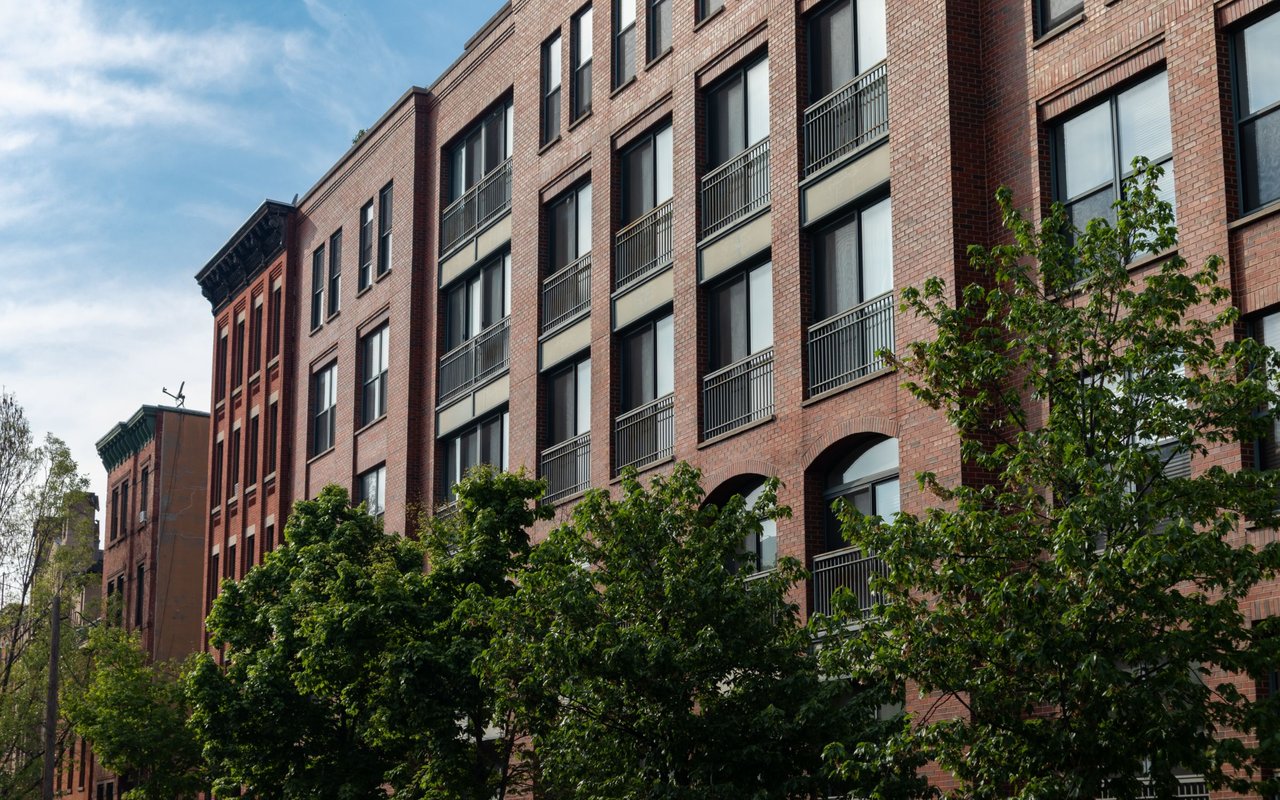
If your home is in a local historic district or is a designated landmark, exterior changes that are visible from the street usually require Historic Preservation Commission review. The HPC issues a Certificate of Appropriateness or Certificate of No Effect, and that comes before your building permit. Learn what triggers review on the Historic Preservation Commission page.
Most kitchen projects that move plumbing, add circuits, relocate gas, change windows or doors, or add a ducted hood need construction permits. The City explains permit types and inspections on the Construction Code page. Routine interior updates that do not change zoning or the exterior footprint usually avoid Planning or Zoning Board hearings, but confirm early.
Small‑kitchen layouts that work
One‑wall
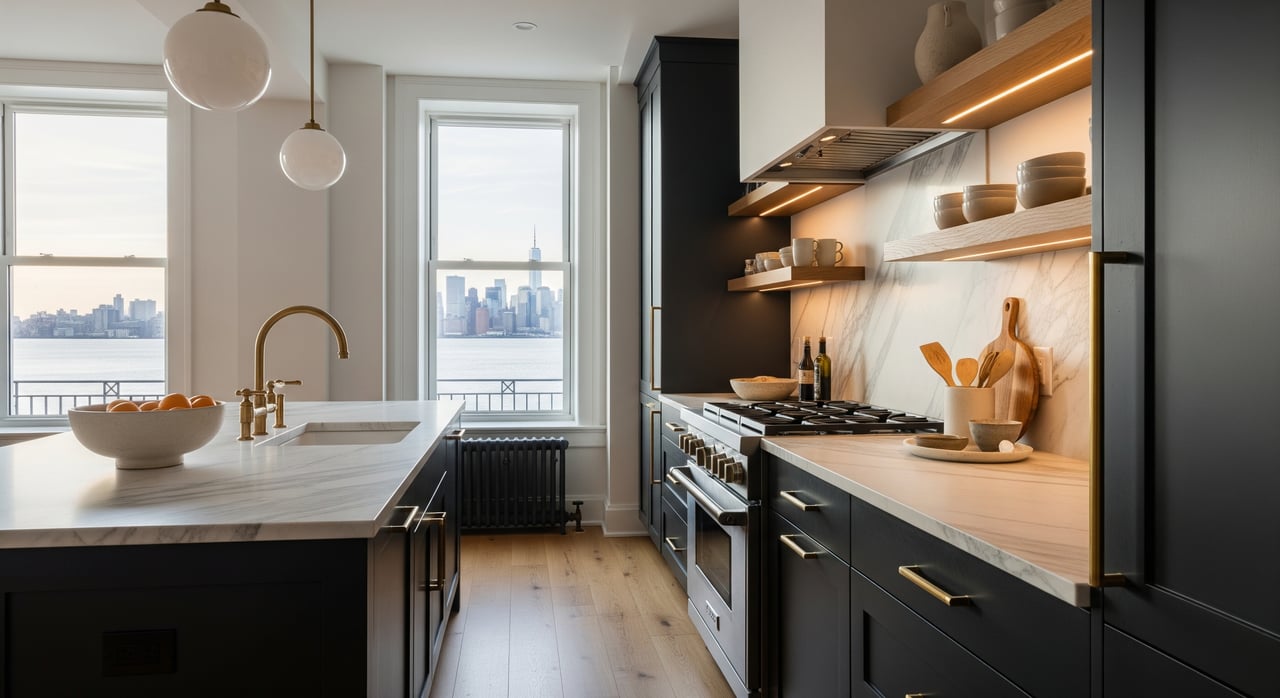
Use a single run when your studio or loft has one clear wall to work with. Max out vertical storage, add under‑cabinet lighting, and keep the sink, cooktop, and fridge in a tight line for an efficient workflow.
Galley
If you have two parallel walls, a galley delivers excellent prep and storage for narrow footprints. Keep at least one side clear for a safe walkway, and use pullouts to avoid wasted corners.
L with peninsula
When an island would crowd circulation, a small peninsula adds seating and prep space without blocking paths. This layout helps define a kitchen zone in open living areas.
Compact U
A tight U can add the most counter length in small to mid‑size apartments. Plan clearances so appliance doors open freely and walkways stay comfortable.
For planning basics like recommended clearances and storage ideas, review the National Kitchen & Bath Association’s guidance on making small kitchens work.
Storage that multiplies space
- Run cabinets to the ceiling to capture vertical volume. Use a simple crown to finish the look.
- Choose pullout pantries, blind‑corner carousels, and toe‑kick drawers so nothing gets lost in the back.
- Add an appliance garage to hide the toaster and coffee maker while keeping counters clear.
- Consider a foldaway table or a slide‑over cutting board for bonus prep area. See compact solutions in these small‑kitchen ideas.
Light, color, and finishes
- Mix ambient lighting with task lighting and under‑cabinet strips so prep zones stay bright.
- Choose a low‑contrast palette. Light cabinets, counters, and backsplash can make the room feel wider.
- Use satin or semi‑gloss finishes to reflect light without showing every fingerprint.
- Keep outlet placement tidy. A simple, consistent backsplash line helps small spaces feel calm.
Right‑size appliances
Compact models protect your counter space and walkways. Narrow refrigerators, 18‑inch dishwashers, drawer dishwashers, and induction cooktops are popular in city kitchens. Explore options similar to these narrow refrigerator picks, and ask your electrician if your panel can support induction before you buy.
Resilience for lower floors
If you live on a garden level or near a flood zone, plan for durability. Hoboken has active flood‑mitigation efforts, and many areas fall within FEMA flood hazard maps. Review the City’s flood map guidance and use water‑tolerant flooring, moisture‑resistant cabinet boxes, and elevated outlets or appliances where appropriate.
Health and safety in older homes
Many Hoboken buildings predate 1978. If you will disturb painted surfaces, the EPA’s Renovation, Repair, and Painting rule requires lead‑safe firms and certified renovators. Ask for proof of certification and lead‑safe practices before work starts. Learn more on the EPA’s RRP program page.
Budget, ROI, and timing
A minor kitchen refresh can stretch your dollars and reduce downtime. National data show that a “minor kitchen remodel” had a high cost recoup in 2024, which supports a light‑touch approach when resale is near. See the trends in Remodeling Magazine’s Cost vs. Value report, then get three local bids since urban labor and delivery costs vary.
Plan your timeline by scope and approvals. Simple interior updates that avoid exterior changes often move quickly, while projects that need HPC review or variances take longer due to hearings and resolutions.
If you are doing X, expect Y
| Scope item | Likely approvals | Typical notes |
|---|---|---|
| Painting cabinets, swapping hardware | Usually no building permit | Confirm condo or co‑op rules first |
| New counters, backsplash only | Usually no building permit | Electrical outlet changes trigger permits |
| Adding circuits, new lighting | Electrical permit | Licensed NJ electrician required |
| Moving sink or gas line | Plumbing permit | Licensed NJ plumber required, inspections |
| Installing ducted hood or new vent | Zoning check, possibly HPC, building permit | Exterior penetrations often trigger review |
| Changing window or door size | HPC if visible, zoning, building permit | Architect plans often required |
| Layout rework with wall changes | Building permit, possibly zoning | Structural changes increase review and time |
Confirm all permit needs with the City’s Construction Code office and start with the Zoning Office for address‑specific guidance.
Two idea boards boards approve
Minor refresh board
- Reface or repaint cabinets, add soft‑close hinges.
- Install quartz counters, a simple tile backsplash, and under‑cabinet LEDs.
- Swap in a 24‑inch Energy Star fridge and an 18‑inch dishwasher.
- Add a pullout pantry and trash‑recycle insert. This path keeps plumbing where it is and often avoids lengthy approvals.
Functional rework board
- Shift to a galley or L with peninsula for better workflow.
- Add a drawer dishwasher and an induction cooktop to save space and improve ventilation control.
- Reorganize storage with full‑height cabinets and corner solutions.
- If you add a ducted hood or change openings, plan for zoning and possible HPC review, and book time for permits and inspections.
Rebates and ongoing savings
Energy‑efficient appliances can lower monthly costs and may qualify for state or utility incentives. Check New Jersey’s Clean Energy Program for current appliance rebates before you purchase. Savings may be modest per appliance, but they add up and support resale appeal.
Quick pre‑remodel checklist
- Call the Hoboken Zoning Office with your address and scope before ordering materials.
- If your building was built before 1978, require an EPA RRP‑certified contractor.
- Ask your electrician if your panel supports induction before budgeting for a new cooktop.
- If you live in a historic district, plan HPC review time for any visible exterior change.
- Review your condo or co‑op alteration agreement and building rules, including work hours and insurance.
- For lower levels, select flood‑tolerant finishes and elevate outlets where appropriate.
Ready to plan your Hoboken kitchen?
You can create a small kitchen that feels bigger, functions better, and passes reviews the first time. If you want help aligning design choices with what buyers want and what boards approve, reach out to Lisa Camarato for local, white‑glove guidance.
FAQs
Do Hoboken kitchen updates need permits?
- Many do. Moving plumbing or gas, adding circuits, changing openings, or adding exterior vents typically requires construction permits, so confirm with the City’s Construction Code office before work.
When does Hoboken’s Historic Preservation Commission review apply?
- If your property is in a local historic district or is a designated landmark and you plan an exterior change visible from the street, HPC review and a certificate usually come before a building permit.
What small‑kitchen layout works best in a Hoboken apartment?
- It depends on your footprint. One‑wall, galley, L with peninsula, and compact U layouts are proven options, and NKBA guidance can help you choose clearances that fit.
How long do permits and approvals take in Hoboken?
- Simple interior permits can be issued in days or weeks, but projects needing HPC review or variances can take months due to hearings and resolutions, so build that time into your schedule.
Are there rebates for efficient kitchen appliances in New Jersey?
- Yes. NJ’s Clean Energy Program offers periodic incentives for Energy Star appliances, so check current rebates before you buy to capture savings.
Which kitchen updates offer the best resale return?
- National data show minor, well‑targeted remodels tend to recoup a higher share of cost than full gut projects, so prioritize updates that improve function, light, and storage if you plan to sell soon.