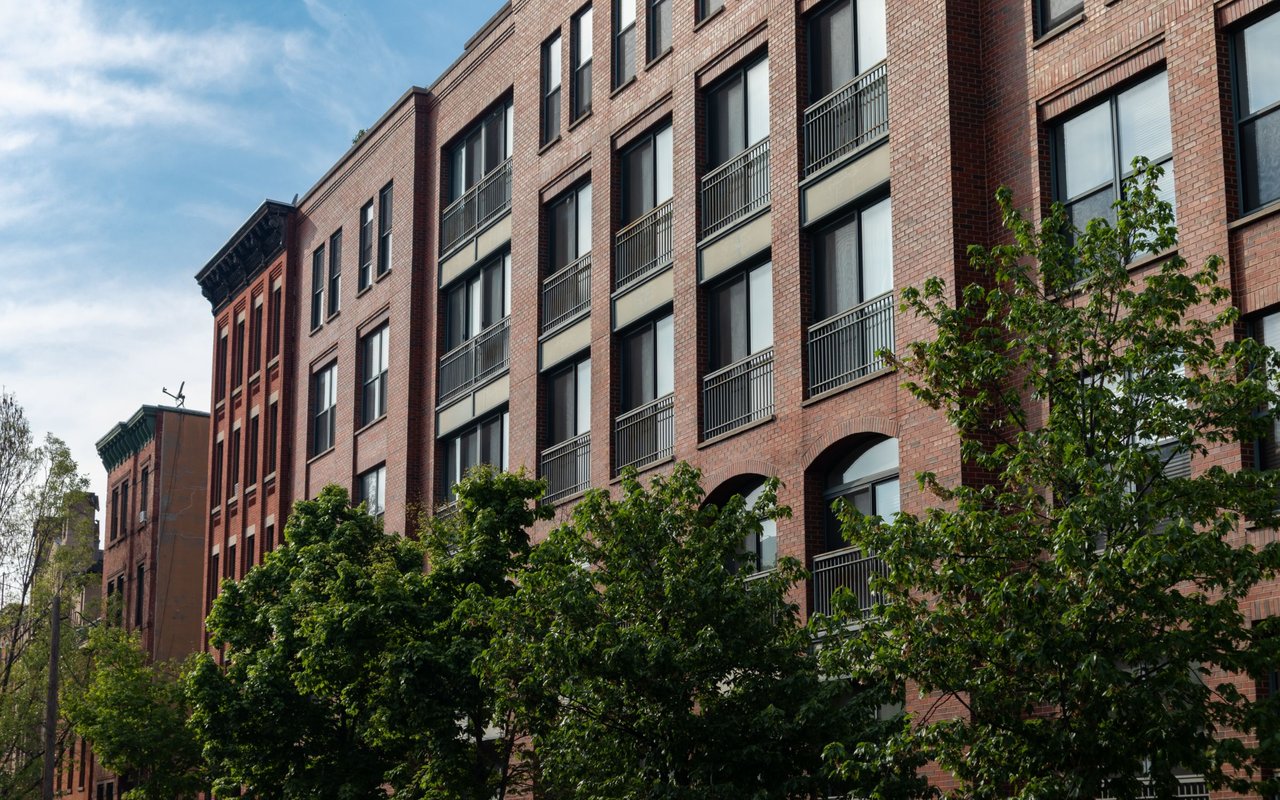
If you are thinking about condo living in Hoboken, the restaurant around the corner and the bar scene down the block may matter almost as much as the square footage. In a city as compact and active as Hoboken, your daily experience is shaped by what happens outside your building as much as what happens inside it. When you understand how dining and nightlife connect to walkability, transit, noise, and parking, you can choose a home that fits the way you actually want to live. Let’s dive in.
Why dining and nightlife matter in Hoboken
Hoboken packs a lot into about 1.25 square miles. With roughly 59,149 residents and a population density of 48,335 people per square mile, everyday life happens close together. That density is a big reason dining, social life, transit, and housing choices are so closely linked.
It also helps explain why condo buyers pay close attention to convenience. Hoboken has a median owner-occupied home value of $895,100, a median gross rent of $2,938, and a mean commute time of 36.8 minutes. In a market like this, location is not just about prestige. It is about how easily you can move through your day.
Where the action is strongest
Washington Street sets the tone
Washington Street is Hoboken’s historic main street and one of the city’s clearest dining and nightlife corridors. NJ TRANSIT describes it as a stretch lined with boutiques, cafés, bars, and restaurants, which makes it a central part of the city’s street life. If you want to be near constant activity, this corridor is usually part of the conversation.
The city’s 2019 Washington Street rehabilitation reinforced that role. The project added pedestrian countdown signals, ADA bump-outs, high-visibility crosswalks, bike lanes, loading zones, and upgraded lighting. Those improvements support a busy mixed-use corridor where people live, dine, shop, and move around throughout the day and evening.
The business district stays active
Washington Street south of Eighth Street is treated as part of Hoboken’s Business District. Recent loading-zone changes extended weekday curb access to support businesses, deliveries, residents, and short-term visitors. That tells you something important as a buyer: this is an actively managed commercial area with steady curb activity, not a quiet residential strip.
For condo living, that can be a plus or a drawback depending on your priorities. You may love having restaurants and everyday conveniences right outside. You may also want to think carefully about delivery traffic, pickup activity, and the pace of the block.
The waterfront adds another layer
Dining and nightlife energy does not stop at Washington Street. Waterfront events like the annual Spaghetti Dinner Block Party on Sinatra Drive and the Waterfront Arts Gala bring food, drink, and foot traffic toward the riverfront. The nearly complete Hudson River Waterfront Walkway also adds to the area’s appeal for residents who want scenery and activity in one place.
That creates a lifestyle many buyers want. You can step out for dinner, walk along the water, and stay connected to transit and parks without needing a car. But it also means some waterfront-adjacent homes may feel more active than buyers expect at first glance.
How this shapes condo living
Convenience is a real selling point
One of the biggest benefits of living near Hoboken’s dining and nightlife scene is how easy life can feel. Hoboken Terminal sits steps from Washington Street and Pier A Park, and the city has rail, light rail, bus, PATH, and ferry service. For many residents, that makes a car-light or even car-free lifestyle realistic.
If you value being able to commute, meet friends, grab dinner, and enjoy the waterfront on foot, this setup is hard to ignore. In a dense urban market, convenience often becomes part of the home’s value proposition. You are not just buying a unit. You are buying time, access, and flexibility.
Urban friction comes with the package
The same features that make these areas appealing can also create daily friction. Buyers near nightlife corridors should expect more noise, more deliveries, more traffic, and more competition for curb space. That does not mean the area is unlivable. It means you should evaluate the building and unit with real-world habits in mind.
Hoboken’s noise ordinance says commercial-establishment noise cannot be clearly audible at 25 feet after 10 p.m., and violations can carry civil penalties of up to $3,000. Still, local rules do not erase urban activity. If you buy close to the busiest blocks, you should plan for some level of street sound.
Parking becomes a quality-of-life issue
Parking is one of the most practical factors in Hoboken condo living. The city’s parking FAQs make it clear that there is not enough curb space for everyone who wants to own a car, and a resident permit does not guarantee a parking spot. That makes private parking more than a luxury feature for many buyers.
At the same time, plenty of residents decide they do not need a car at all. With so many transit connections, some buyers would rather prioritize location, building quality, and storage over parking. The right answer depends on how often you drive and how much convenience you want built into daily life.
Condo features that matter more here
Soundproofing matters more than usual
Near Washington Street, Hoboken Terminal, or busy waterfront blocks, soundproofing should move higher on your checklist. Window quality, wall construction, and unit placement can all affect your comfort. A beautiful condo in the right location can feel very different depending on how well it buffers street activity.
Units facing a side street or interior courtyard are often more appealing than those directly above a late-night corridor. Higher-floor homes may also offer a quieter experience. In Hoboken, those details can shape how relaxed your home feels after a busy day.
Outdoor space adds breathing room
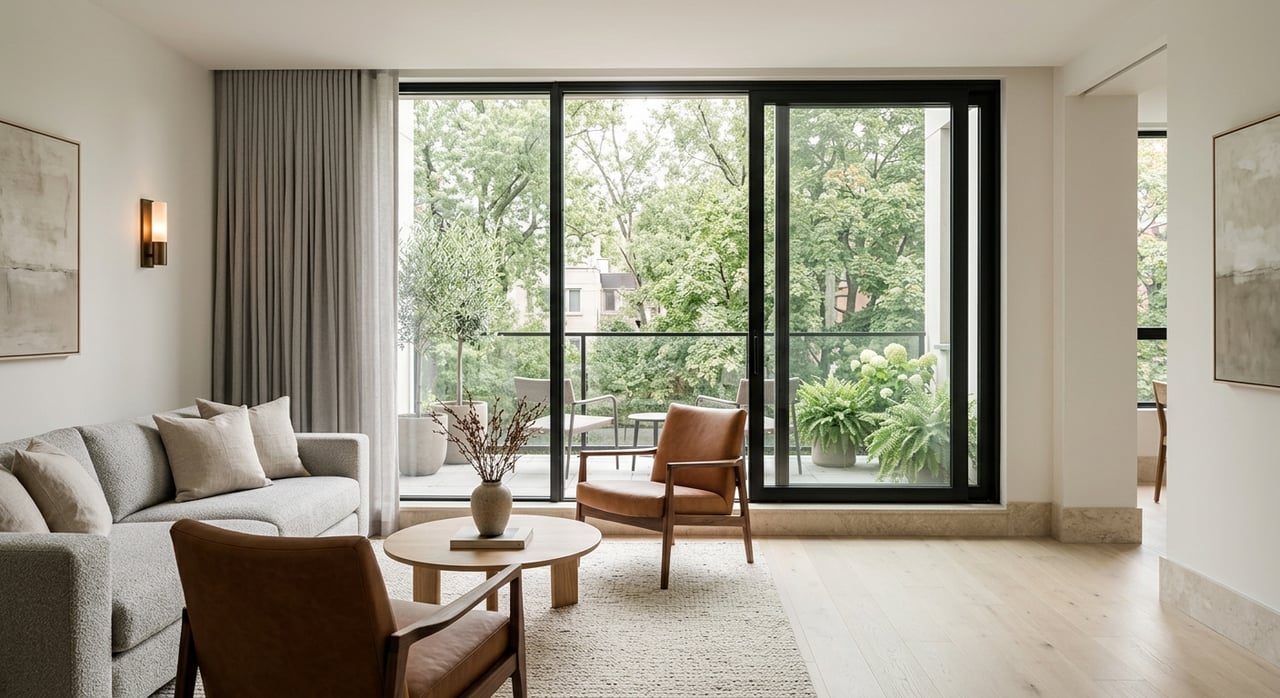
Hoboken says all residents live within a 5-minute walk of a park, and the city has about 53 acres of park space, or roughly 1 acre per 1,000 residents. That is a strong amenity for an urban setting. Even so, private outdoor space can feel especially valuable when you live near active streets.
A balcony, terrace, or setback layout gives you a place to unwind without leaving home. It is not replacing the city’s parks or waterfront. It is adding a quieter personal layer to an otherwise energetic environment.
Elevator access improves everyday living
In a transit-oriented city, convenience is not only about location. It is also about how easy the building is to live in day to day. Hoboken Terminal has elevator access to street level and platforms, and PATH identifies Hoboken among its elevator-accessible stations.
That same logic applies inside residential buildings. Elevator buildings can make upper-floor living easier for groceries, packages, stroller use, guests, and long-term comfort. If you are weighing two similar condos, elevator access may have more practical value than you first assume.
Parking can outweigh flashier amenities
Some buyers focus first on finishes, views, or shared amenities. In Hoboken, parking can end up having a bigger impact on daily satisfaction. If you rely on a car for work, family visits, or weekend travel, an included or reliable parking solution can change how you experience the property.
That does not mean every buyer needs it. But it does mean parking should be assessed honestly, especially if you are looking near the city’s busiest restaurant and nightlife areas. In this market, reducing friction is part of smart buying.
How to choose the right block for you
If you want the full lifestyle
If you love being in the middle of the action, focus on homes closest to Washington Street, Hoboken Terminal, and the waterfront. These areas often offer the easiest access to dining, nightlife, events, and transit. They can be a great fit if you want your neighborhood to feel social, walkable, and always in motion.
You should still look closely at the building itself. A well-positioned unit in an active area can give you the best of both worlds. The goal is not just to live near the fun. It is to enjoy it without sacrificing too much comfort at home.
If you want balance
Some buyers want walkability without feeling surrounded by activity every night. In broad terms, calmer options are often a little farther west or north while still remaining walkable to parks and transit. That can be a strong middle ground if you enjoy Hoboken’s dining scene but want a more buffered home base.
This is where block-by-block guidance really matters. Two condos may look similar online, but their street exposure, curb activity, and distance from late-night foot traffic can feel very different in person.
What you are really paying for
In Hoboken, condo value is often tied to more than interior finishes. You are frequently paying for proximity to dining, access to multiple transit options, time saved on commuting, and relief from common urban stress points like noise and parking. Those practical benefits become part of the ownership equation.
That is why condo shopping here works best when you match the property to your routine, not just your wishlist. The right home is not always the one closest to every hotspot. It is the one that supports how you want your days and nights to feel.
If you are sorting through Hoboken condos or co-ops, it helps to have local guidance that goes beyond listing photos and square footage. Lisa Camarato offers a personalized, white-glove approach to buying, selling, and renting in Hoboken, with the local insight to help you weigh lifestyle, building details, and long-term fit with confidence.
FAQs
How does Hoboken dining and nightlife affect condo living?
- Dining and nightlife can make condo living more convenient and social, but they can also bring more noise, deliveries, traffic, and curb competition near the busiest corridors.
Where is Hoboken’s main dining and nightlife corridor?
- Washington Street is the city’s historic main street and a key corridor for cafés, bars, restaurants, and other active street-level businesses.
Can you live car-free in Hoboken condos?
- Often yes, because Hoboken has rail, PATH, light rail, bus, and ferry connections, though parking is limited for residents who do keep a car.
What condo features matter most near Hoboken nightlife?
- Soundproofing, unit orientation, higher-floor placement, outdoor space, elevator access, and parking can all have an outsized impact on comfort and convenience.
Does Hoboken still offer quiet outdoor space?
- Yes, the city says all residents are within a 5-minute walk of a park, and private balconies, terraces, and courtyards can add a quieter place to unwind near active streets.