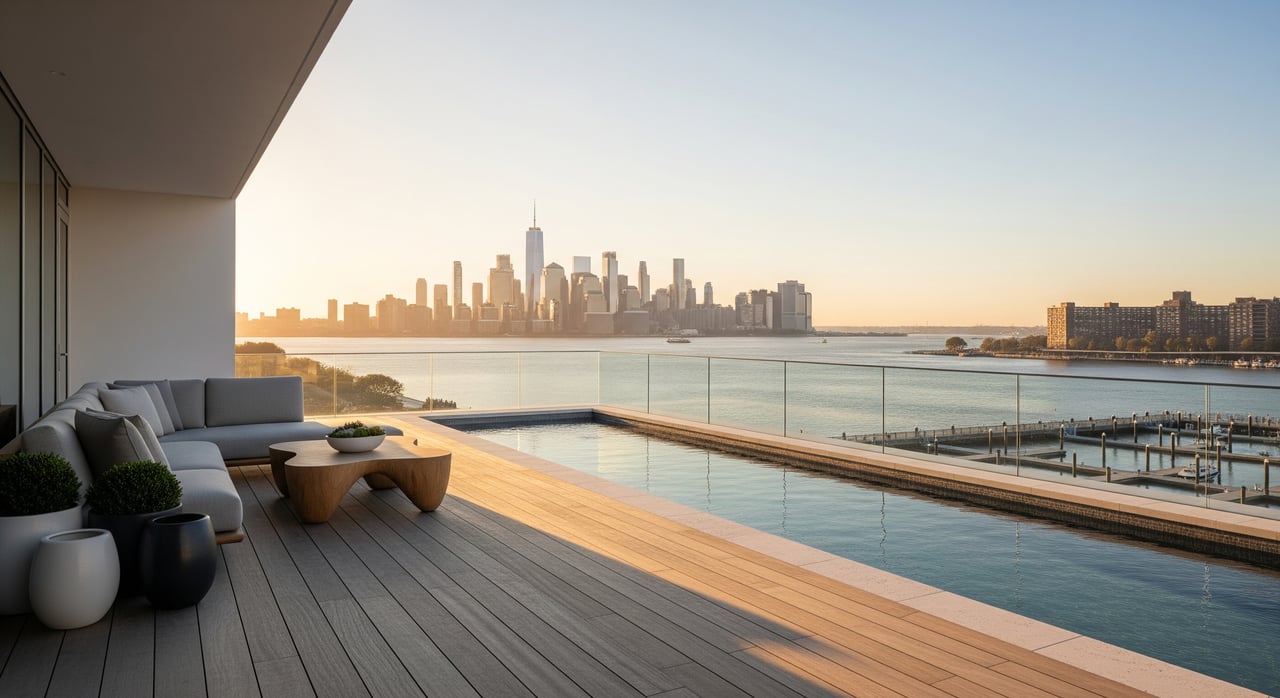
Do you picture coffee at sunrise with Manhattan skyline views right outside your window? If you’re eyeing Edgewater’s Hudson River waterfront, you’re not alone. The lifestyle is compelling, but every amenity comes with costs and choices you should understand. In this guide, you’ll learn what these buildings typically offer, the real trade-offs to weigh, and a simple checklist to compare options with confidence. Let’s dive in.
Why Edgewater’s waterfront appeals
Edgewater’s River Road corridor is lined with mid- to high-rise buildings developed from the 1980s through the 2000s, plus a handful of newer luxury and adaptive reuse projects. Many cluster near ferry stops and along a continuous riverfront promenade. The draw is clear: views, outdoor access, and direct or simple connections to Manhattan. That lifestyle often includes a fuller amenity package and higher recurring costs.
Typical amenity stacks
Building services
- Doorman or concierge, sometimes 24/7.
- On-site management and secure package rooms.
- Controlled access and security cameras.
- Staffed garage or valet in larger properties.
Parking and vehicles
- In-building parking, either deeded, assigned, or monthly rental.
- Rules for guest parking and visitor passes.
- EV charging can be limited; confirm policy for installing chargers.
Transit convenience
- Walkable access to ferry piers or NJ Transit bus stops.
- Private building shuttles to ferry or PATH in some communities.
- Bike storage or repair stations vary by building.
Health and recreation
- Fitness centers and clubrooms are common.
- Rooftop terraces, riverfront promenades, and landscaped plazas.
- Pools are often outdoor and seasonal; indoor pools are less common.
- Steam, sauna, or yoga studios appear in higher-end properties.
Lifestyle and convenience
- Ground-floor retail, cafes, or convenience stores in larger sites.
- Package lockers and mailrooms.
- Pet facilities such as dog-wash stations or small pet areas.
- Event rooms, business centers, and sometimes guest suites.
Building mechanics
- Central HVAC versus in-unit systems affects bills and maintenance.
- Energy-efficiency upgrades are more common in newer or renovated buildings.
- Newer projects may feature flood-mitigation design.
The real trade-offs
HOA fees vs. amenity level
- More amenities and staffed services usually mean higher monthly fees.
- Ask for the budget, audited financials, and a reserve study before you commit.
- Look for recent or planned special assessments and the reasons behind them.
Commute choices
- Ferry rides are scenic and can be quick, but schedules and weather affect reliability. Check current routes and timetables with the NY Waterway site.
- Some buildings run shuttles; confirm frequency, hours, and whether cost is included in HOA fees.
- River Road can see peak-hour congestion. If you drive, weigh parking availability and access.
Noise, privacy, and microclimate
- River traffic, ferry horns, and busy promenades can add ambient noise.
- Higher floors often bring quieter interiors and better views at a premium.
- Wind and salt exposure can increase exterior maintenance needs.
Flood risk and insurance
- Flood zone status can influence loan requirements and insurance costs. Verify your address on the FEMA Flood Map Service Center.
- Ask whether mechanicals are elevated above base flood elevation and if the building has mitigation features.
Parking allocation and costs
- Deeded spaces can add resale value but may increase taxes and exposure to assessments.
- Assigned or rental parking can be flexible but may limit second-car options.
- Valet service adds convenience and operating costs; review guest parking rules.
Resale and market appeal
- Full-service buildings appeal to more buyers and renters, which can help resale, but higher HOA fees can narrow your buyer pool.
- Lower-fee buildings attract cost-conscious buyers but may limit lifestyle appeal.
Rules and flexibility
- Review leasing policies, minimum terms, and any caps on the percentage of units allowed to rent.
- Confirm pet rules, renovation approvals, and any short-term rental restrictions.
Commute options to verify
- Ferries: Confirm current routes, frequency, and peak/off-peak schedules on the NY Waterway site.
- Buses: Check NJ Transit bus lines that run along River Road and to Port Authority at NJ Transit.
- Shuttles: If your building offers one, request service hours, pickup windows, and whether the cost is included in HOA fees.
- Bikes: Ask about storage, security, and whether there’s a repair station.
Flood and insurance basics
- Look up flood zone designation and base flood elevation for the building on the FEMA Flood Map Service Center.
- Ask for any elevation certificates and details on flood-mitigation infrastructure.
- Get multiple quotes for condo, contents, and flood coverage to understand true carrying costs.
Parking realities on River Road
- Clarify whether parking is deeded, assigned, or leased and how that affects taxes and fees.
- Ask about availability and pricing for a second space, plus guest parking rules.
- Confirm EV charging availability or building policy for installing a charger.
Managing noise and exposure
- Visit at different times to gauge river, street, and promenade noise.
- Check unit orientation and glazing; higher floors can reduce street noise.
- Consider how afternoon sun or prevailing winds align with your comfort.
Rules that shape your lifestyle
- Request condo bylaws, house rules, and pet policy before you make an offer.
- Review leasing terms if you plan to rent in the future; confirm any caps and minimum lease lengths.
- Note any restrictions on renovations and common space reservations.
Compare two buildings fast
Use this side-by-side checklist during showings:
- Fees and reserves: Monthly HOA, what’s included, reserve study status, recent assessments.
- Commute: Walk time to ferry or bus, shuttle details, peak-hour experience.
- Parking: Type of space, second-car options, guest parking, EV charging.
- Amenities: Pool, gym, rooftop, promenade access, pet facilities, on-site retail.
- Operations: Doorman coverage, on-site management, package handling.
- Flood and mechanics: Flood zone, elevation certificates, mechanicals placement, mitigation features.
- Rules: Leasing policy, pet limits, renovation rules.
- Noise and exposure: Unit orientation, window quality, proximity to active public spaces.
Showing-day questions
Bring this list to your tour or manager meeting:
- Can I review the latest budget, audited financials, and reserve study?
- Are there any approved special assessments or large capital projects planned?
- What exactly is included in the HOA fee each month?
- How often does the shuttle run and is there a separate fee?
- What are the policies and costs for a second parking space and guests?
- What is the building’s flood zone and mitigation plan?
- What are the leasing rules, including minimum terms and any rental caps?
Who Edgewater fits best
- Daily ferry commuter: You might favor walkable ferry access or a reliable shuttle, even if it means a higher HOA.
- Lifestyle-first buyer: You may prioritize rooftops, riverfront access, and on-site retail, and accept busier common spaces.
- Downsizer: You could value doorman service and on-site management, with a close eye on monthly fees.
- Investor: You’ll focus on leasing rules, renter demand, and whether amenities support rental premiums.
Next steps
Edgewater’s waterfront can deliver a standout lifestyle if the amenities, fees, commute, and building rules match your goals. The smartest move is to compare a short list of buildings using the same criteria and verify details with official documents and current transit schedules. If you want strategic guidance and calm, governance-savvy representation as you tour buildings along River Road, connect with Lisa Camarato.
FAQs
How Edgewater amenities affect monthly costs
- More services like doorman, pool, valet, and shuttles typically increase HOA fees; review the building budget, reserve study, and any assessments to see the full picture.
Is ferry commuting reliable from Edgewater
- Ferries can be fast and comfortable, but operate on set schedules and can be affected by weather; check current routes and timetables on the NY Waterway site before you decide.
Does waterfront living raise insurance costs
- Flood zone status can trigger lender requirements and higher premiums; verify your building on the FEMA Flood Map Service Center and get multiple quotes.
Can I park two cars in Edgewater condos
- Options vary by building; ask about second-space availability and fees, whether spaces are deeded or assigned, and guest parking rules.
How condo rental rules impact investors
- Leasing policies often set minimum terms and caps on rented units; review bylaws and confirm any restrictions on short-term rentals before you buy.
What noise differences by floor should I expect
- Lower floors near River Road or active public areas may hear more traffic or promenade noise, while higher floors can be quieter and offer better views at a premium.